Study nature, love nature, stay close to nature. It will
never fail you.” Frank Lloyd Wright
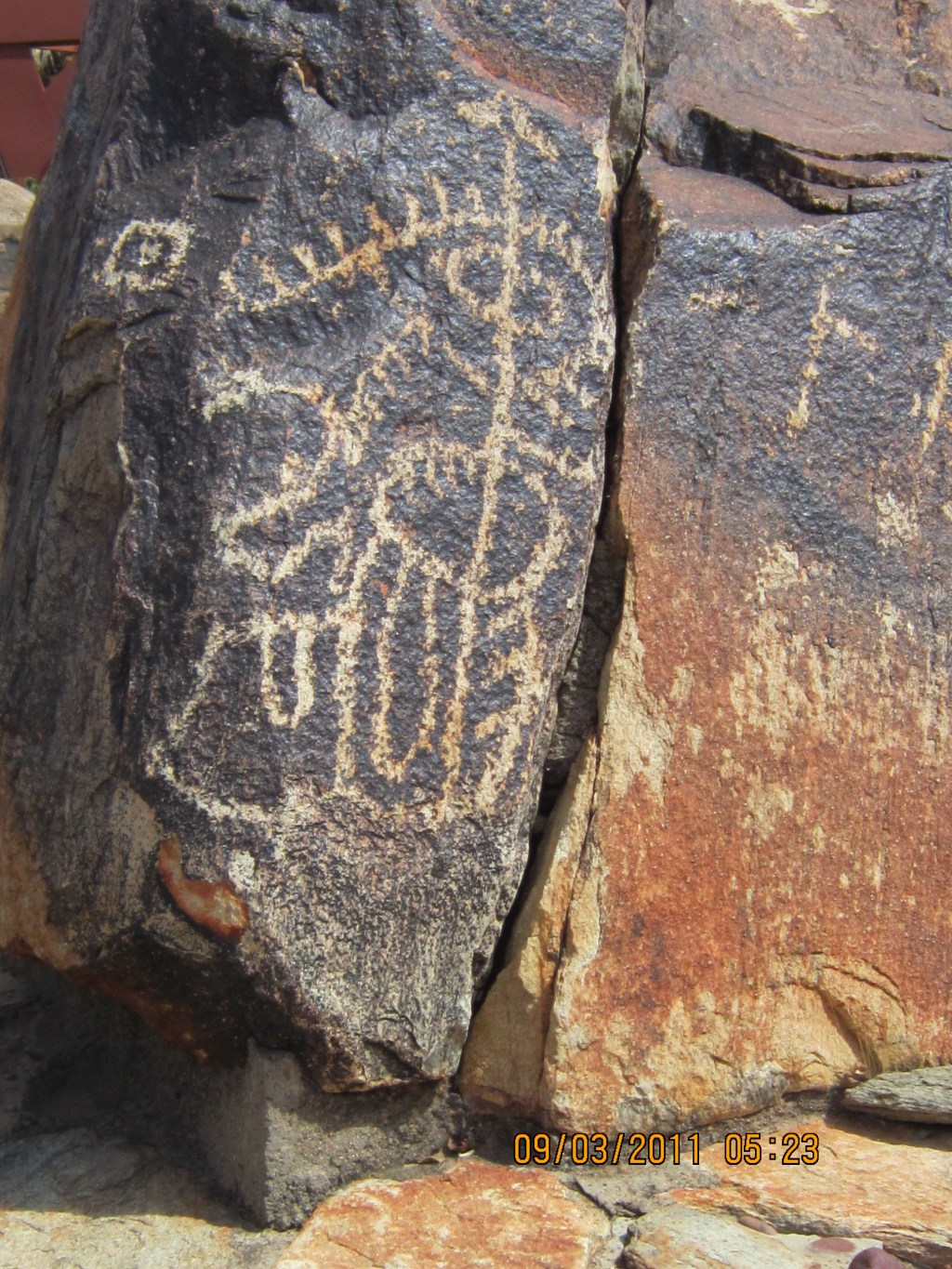
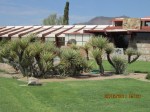
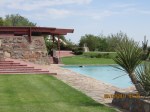
The desert has a voice. And Frank Lloyd Wright heard it a long time ago. He arrived in Scottsdale in the 1930s and ten years later had built Taliesin West as his winter residence, architectural studio and campus. Taliesin is the name of a Welsh poet and translated it means shining brow. This complex carved out of the desert rocks— literally gathered by hand by his apprentices, is a uniquely American architecture that blended man-made structures with the environment. It is also a living laboratory of the mind of a genius – a man who had a very American vision, and who was so far ahead of his time.
Born and raised in Wisconsin, he had limited formal education. In his boyhood, he had to work long, back breaking hours in the fields, starting the day at 4 a.m. During his late teens he set out on his own for Chicago with virtually nothing and got a job with Louis Sullivan, one of the greatest American architects of his time. There he learned the basics of drafting and went on to launch his own career.
Visiting Taliesin West was opening the door into the mind and world of a great architect. What stood out was that the buildings were designed from the inside out, meaning that the life that one lives inside the building controls the outer forms that develop organically from that. Integration with the natural environment was evident everywhere. Sunlight illuminated the buildings. There was no electricity there for many years. Wright believed that a building should never be on top of a hill or mountain top, it should be on the brow and within the environment, not dominating it. Taliesin West was a constant work in progress — always changing, always experimenting and this was also true of the furniture that Wright designed to go with the buildings. He was the first to create steel frame furniture and we were told that Steelcase in Grand Rapids owed its existence to Wright’s innovations.
It was a bonus that our guide was an architect. The architect has to be a poet he told us, and much more besides. As Frank Lloyd Wright puts it, “The complete architect is
master of the elements: earth, air, fire, light and water, space, motion and gravitation are his palette: the sun his brush. He, of all men, must see into the life of things…”





 Naseem's Blog
Leave a comment