Things right themselves – sometimes. A few weeks ago, while exploring a trail at the Ding Darling National Wildlife Refuge on Sanibel Island, we came across a group of beautiful Roseate Spoonbills feeding in a mangrove marsh. Their pink feathers always remind me of peonies in the early summer. It is a quirk of nature that these large wading birds have such unattractive looking bills-flat and spoon like, so gauche in contrast to their exotic plumage. I think my heart always beats faster when I see these creatures in the wild.
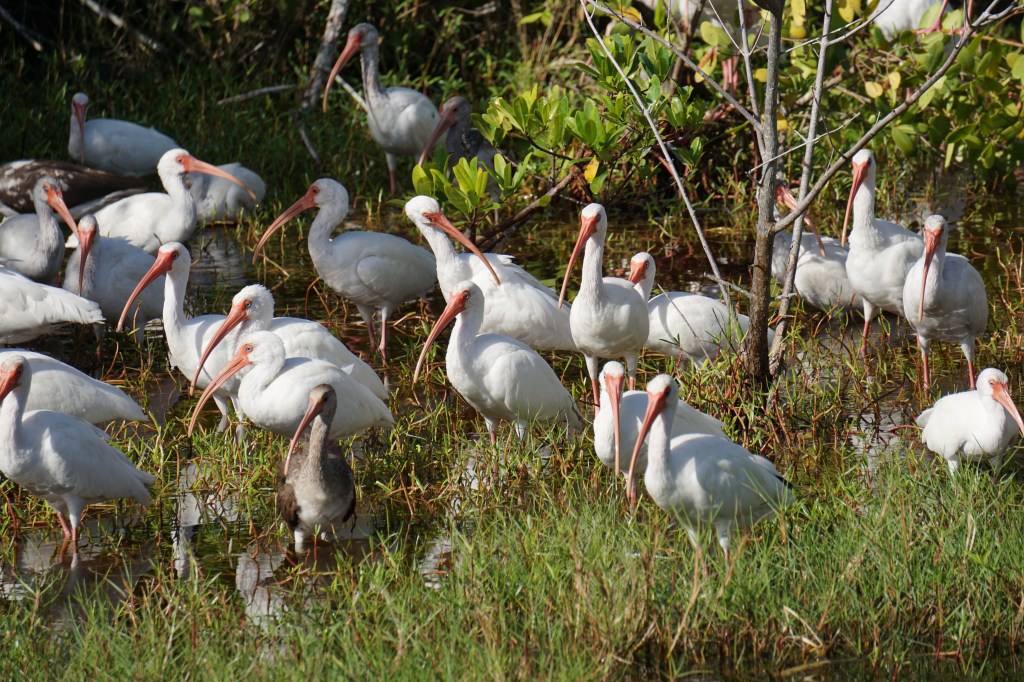
Photographing them was the natural thing to do except on this occasion, I had a new camera with me and I was still trying to figure it out. I was not certain it was the right one for me and I had a month to decide if I wanted to keep it. Perhaps it was my excitement at seeing the birds, the newness of the camera, whatever the reason, I was unable to focus properly and took only one mediocre shot of the group. It was frustration in the extreme. Just minutes before, I had been giddily snapping photos of numerous long-legged ibises in all their natural glory. Saddened that I missed a wonderful opportunity to capture the Roseates, I eventually returned the fancy, expensive camera and am back with my trusty Canon that I do love, but hate to lug around because it is so bulky.
This week I am at Madeira Beach in the Tampa area. Just a few miles from where we are staying, is a place called the Suncoast Seabird Sanctuary which is actually a hospital for injured birds. It happens to be the largest non-profit wild bird sanctuary in the country. While there was no Roseate Spoonbill recuperating here (the only one they had died last year after living to a ripe old age by bird standards), they did have a large thriving colony of black capped night herons,which are not easy to spot anywhere! Also, Bitterns, Sandhills Cranes and loads of brown as well as white Pelicans.
When you walk into the sanctuary, Pelicans and Wood Storks might be waiting at the entry. They are not skittish and this makes photographing them all that much easier. If I actually lived here, I would volunteer in this facility! On average, 15 to 20 birds are admitted daily, evaluated and given the care they need. Ninety percent of their injuries are because of human activity. Up to 5,000 injured birds belonging to almost 160 species are brought in each year . The hospital van goes out to pick up the injured critters. The sanctuary houses emergency facilities, a surgical center and indoor and outdoor rehabilitation areas. Eighty percent of those that survive the first day at the sanctuary are rehabilitated. The facility has had great success, not just taking care of injured birds, but also running an innovative captive breeding program for brown pelicans. The ultimate goal of the place though is to release the birds to the wild where they belong. In fact, the overall philosophy is : Rescue, Repair, Rehabilitate and Release. Suncoast is open year round and is free to all.
So, I froze when it came to Spoonbills in the wild but I had a unique opportunity to take so many shots of other Florida coastal birds that I never expected. Plus I saw what a few dedicated people can do to ease the suffering of feathered creatures great and small.


 Naseem's Blog
Leave a comment