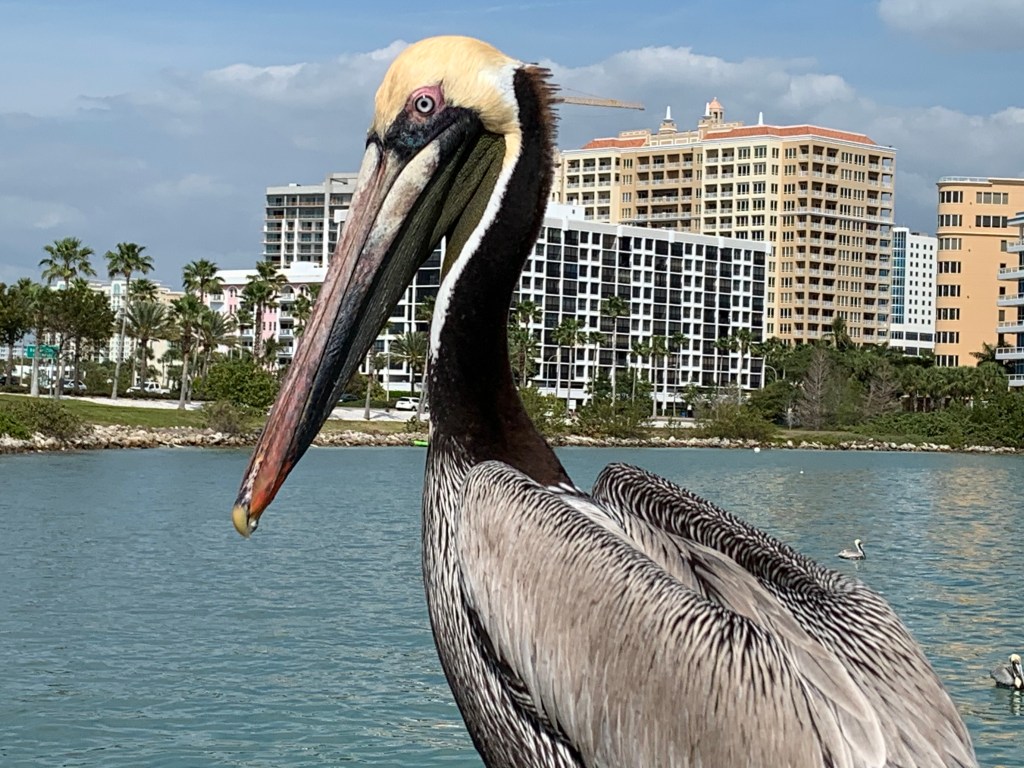
We are now snowbirds. Like thousands of other “baby boomers” we escape the northern winter each year to thaw out in warmer climes. In our case, the Sunshine State, Florida. There are things about Florida that remind me of my birthplace – Singapore. The lush green vegetation, the hot weather, the blue water all around. Luxuriant tropic landscapes have always appealed to me. What’s different here are all the large birds we see daily. Pelicans, Eagles, Osprey, Cormorants and Anhingas that shelter in the mangrove-lined shore of Little Sarasota Bay and its environs.

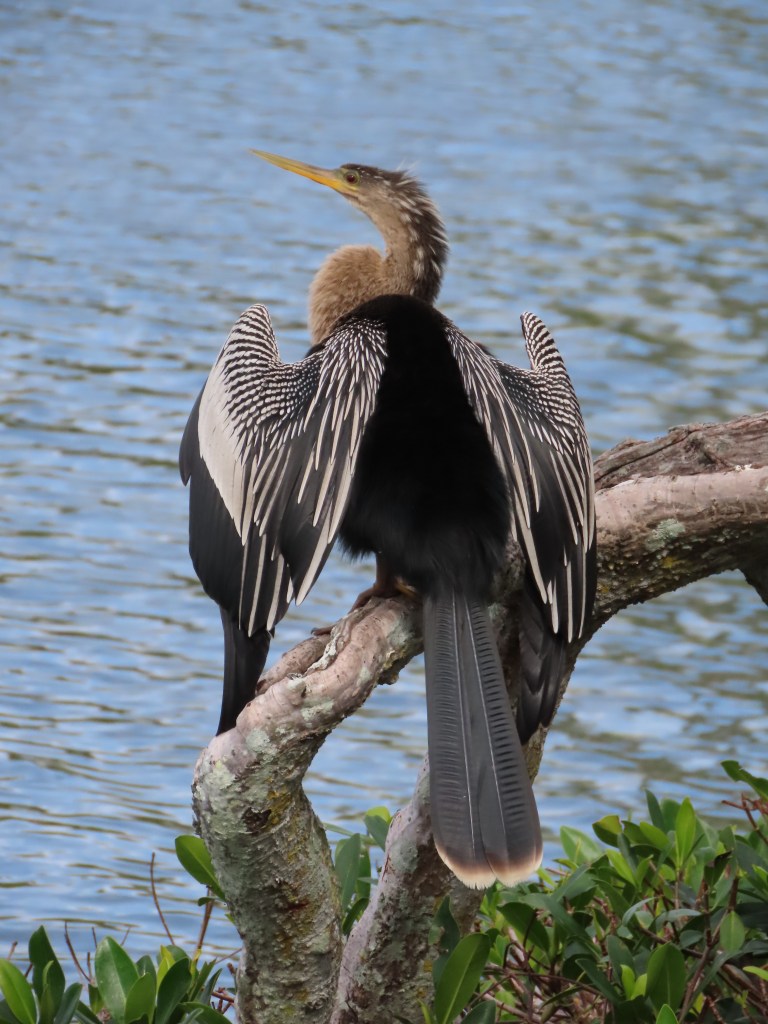
Wading birds like herons, egrets and ibises abound. Common species such as jays, cardinals, parrots and mockingbirds live here, as well as many types of warblers that pass through during the winter. Like us, it’s a convenient stopover for these migratory songbirds.
Amid all this variety, Brown Pelicans occupy a special position. Although they’re not especially attractive, pelicans are the most distinctive and widely recognized birds here. They are great divers and can often be seen plunging 20 to 30 feet for fish. Quiet walks by Little Sarasota Bay can become quite eventful just watching these birds feed. We are fortunate to also see their close cousins the American White Pelican during the months of December through March. A couple of hundred of them congregate on a sand spit in our bay. Then one day, they are all gone – flying back to their breeding grounds in north central U.S. and Central Canada. Unlike the Brown Pelicans, the White Pelican is a cooperative feeder. Groups will gather on the water and herd the fish into a concentrated area. So different from the lone diving Brown Pelicans.
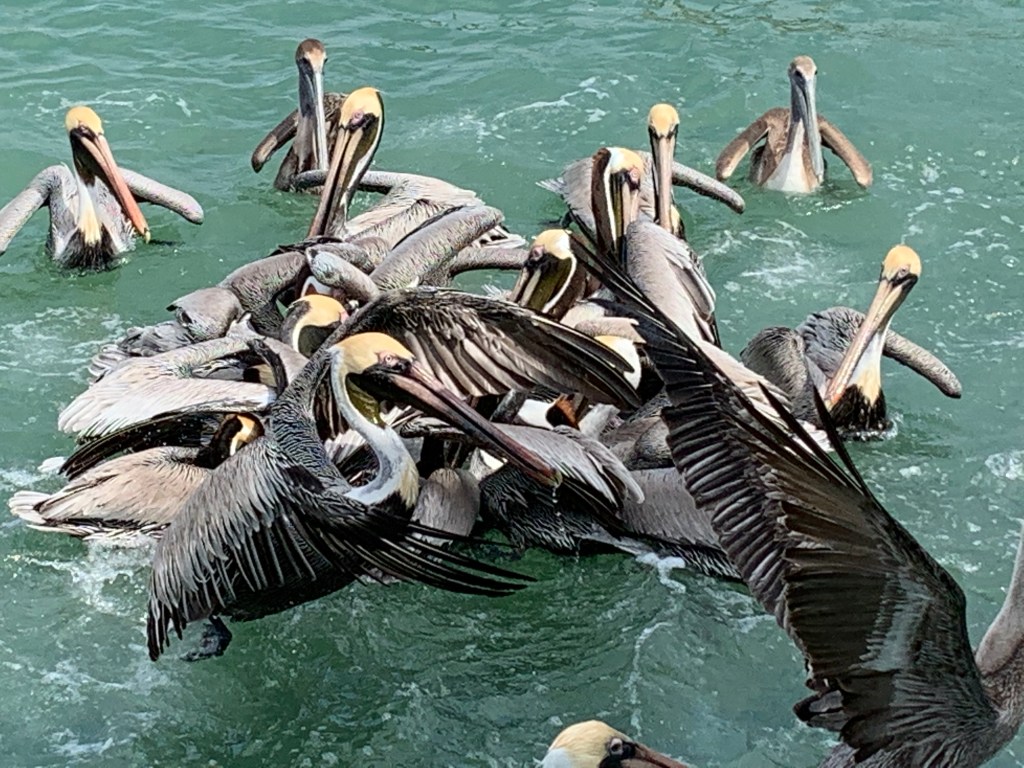
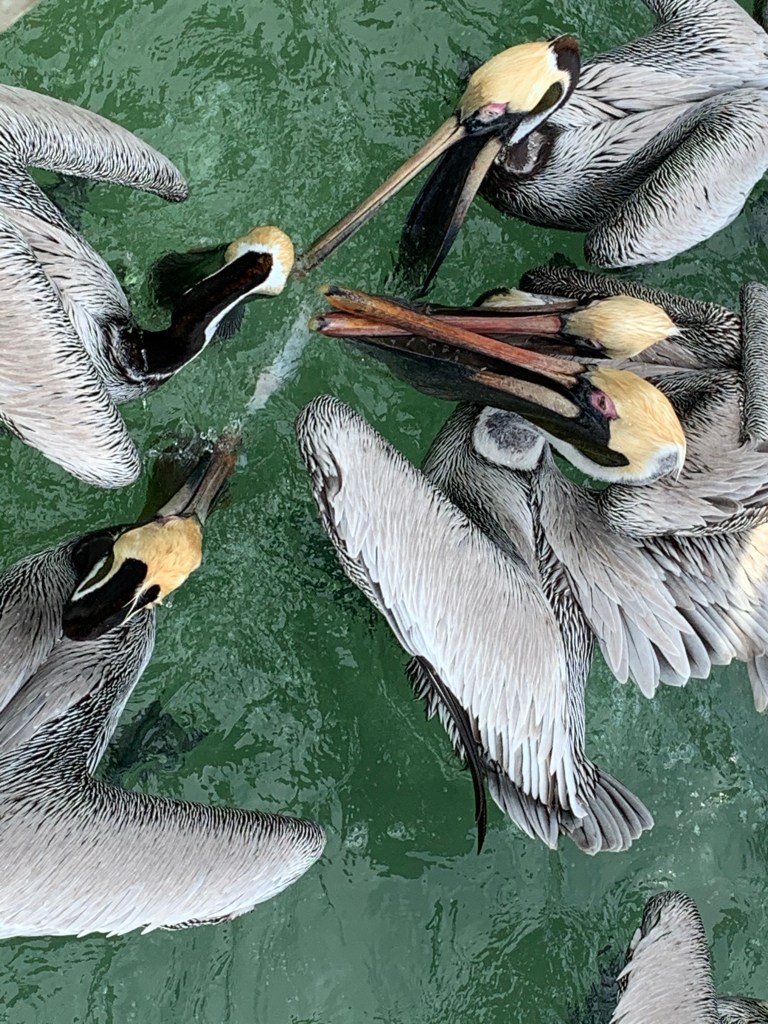
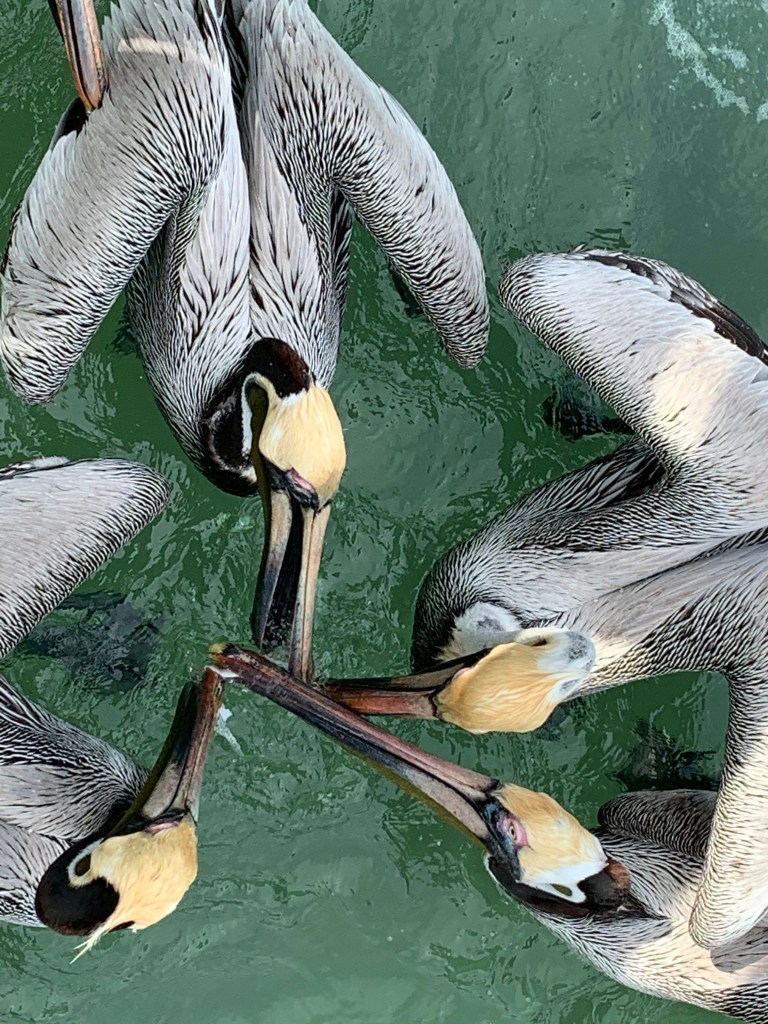
On a recent fishing trip in the Sarasota Keys taken with family members just before the pandemic was declared, I found new appreciation for the Brown Pelican. As our guide cleaned the Sheepshead fish we caught and tossed the remains in the water, groups of pelicans gathered to feast on these offerings. What I really loved about them was their coloring – beautiful shades of grayish-brown, dark reddish brown and white and yellow on the top of the head. These were the adult pelicans. The juveniles had a drab brown plumage. I took so many photos that I feel compelled to share some of them here.


 Naseem's Blog
Leave a reply to nstecker Cancel reply